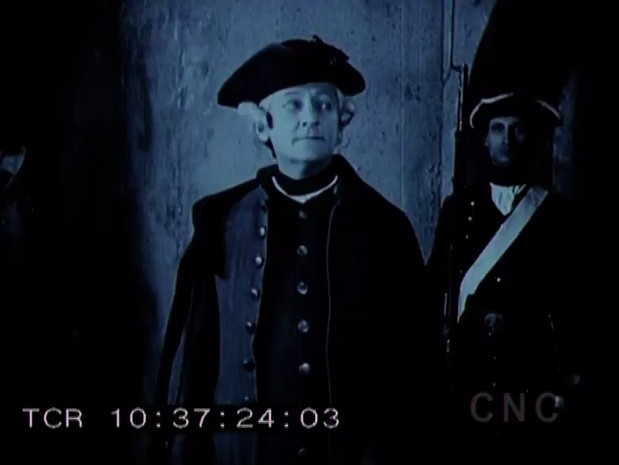
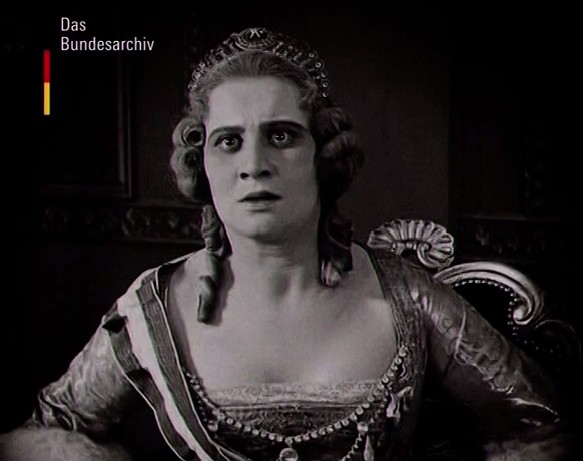
Part 1: Sturm und Drang: In the first part, the young Crown Prince is introduced to us. Displayed is Friedrich's artistic talents, for which his strict father, the Margrave of Brandenburg and Prussian king, Friedrich Wilhelm I, has little understanding and patience. It isn't long before there's a conflict between Friedrich's interests and wishes on the one side, and the expectations of his father, the "Soldier King", who wishes to see Friedrich disciplined for his future role as the head of state. But the two men are irreconcilable opposites. The bitter rift between father and son eventually culminates in the prince's imprisonment and the execution of his best friend, von Katte.
Part 2: Father and Son: Crown Prince Friedrich, in the meantime pardoned by his father, is drawn ever closer to his musical interests, which leads to a constant conflict with the king. The strict monarch is determined to make the crown prince ready for the military and economic duties he will inherit as Friedrich II. Finally, Friedrich is compelled to matter the daughter of a duke, Elisabeth Christine von Braunschweig-Bevern. When his father dies in 1740, Friedrich becomes king.
Part 3: Sanssouci: In this part, we see Friedrich in his life as a new king. In Potsdam, he has the palace Sanssouci built, which will fulfill his desire to create a place of intellectual and artistic life. As the new King of Prussia, Friedrich endeavors to translate the ideals of his youth into high politics. He orders the abolition of torture and establishes freedom of religion. He patronizes the arts and cultivates a close relationship with the French philosopher Voltaire, whom he invites to Sanssouci to exchange philosophical ideas.
Teil 1: Sturm und Drang: Im ersten Teil wird der jugendliche Kronprinz vorgestellt. Herausgestellt wird Friedrichs musisches Talent, das bei seinem strengen Vater, dem Markgrafen von Brandenburg und Preußenkönig Friedrich Wilhelm I., auf wenig Verständnis stößt. Rasch schält sich ein harter Widerstreit zwischen Friedrichs Interessen und Wünschen einerseits und den Erwartungen des Soldatenkönigs andererseits heraus, der seinen Sohn für die kommenden Staatsaufgaben disziplinieren will. Es sind Gegensätze, die sich nicht überwinden lassen. Bald kommt es zum Zerwürfnis zwischen dem rigiden Vater und seinem freigeistigen Sohn, das in seiner Einkerkerung und in der Hinrichtung von Friedrichs bestem Freund Katte gipfelt.
Teil 2: Vater und Sohn: Kronprinz Friedrich, vom Vater im Fall Katte mittlerweile begnadigt, interessiert sich immer stärker für die Musik, was zu einem andauernden Konflikt mit dem König führt. Der strenge Monarch versucht die Aufmerksamkeit des Kronprinzen, der ihm als Friedrich II. auf dem Thron folgen soll, ganz auf militärische und wirtschaftliche Belange zu lenken. Schließlich heiratet Friedrich eine Herzogstochter, Elisabeth-Christine von Braunschweig-Bevern. Als sein ungeliebter Vater 1740 stirbt, wird Friedrich König.
Teil 3: Sanssouci: Dieser Teil setzt die Lebensgeschichte Friedrichs als Monarch fort: In Potsdam lässt Fridericus Rex das Schloss Sanssouci errichten, das nach seiner Fertigstellung ein Ort des Geistes und der Künste werden soll. Als neuer König von Preußen versucht Friedrich, die Ideale seiner Jugendjahre in hohe Politik umzusetzen. Er veranlasst die Abschaffung der Folter und setzt die Freiheit des Glaubens durch. Er fördert die Kunst und knüpft einen engen Kontakt zum französischen Philosophen Voltaire, den er zum Gedankenaustausch nach Sanssouci einlädt.
Parts I and II of this film has French intertitles and optional English subtitles. Approx. 86 mins. It has both a logo and a running timer on the film's bottom edge.
Part III has German intertitles and optional English subtitles. Approx. 58 mins.
See film sample for audio and video quality.